


Written by Alex Seleznev, MBA, CFP®, CFA & Asi de Silva CFA | Feb 12, 2025
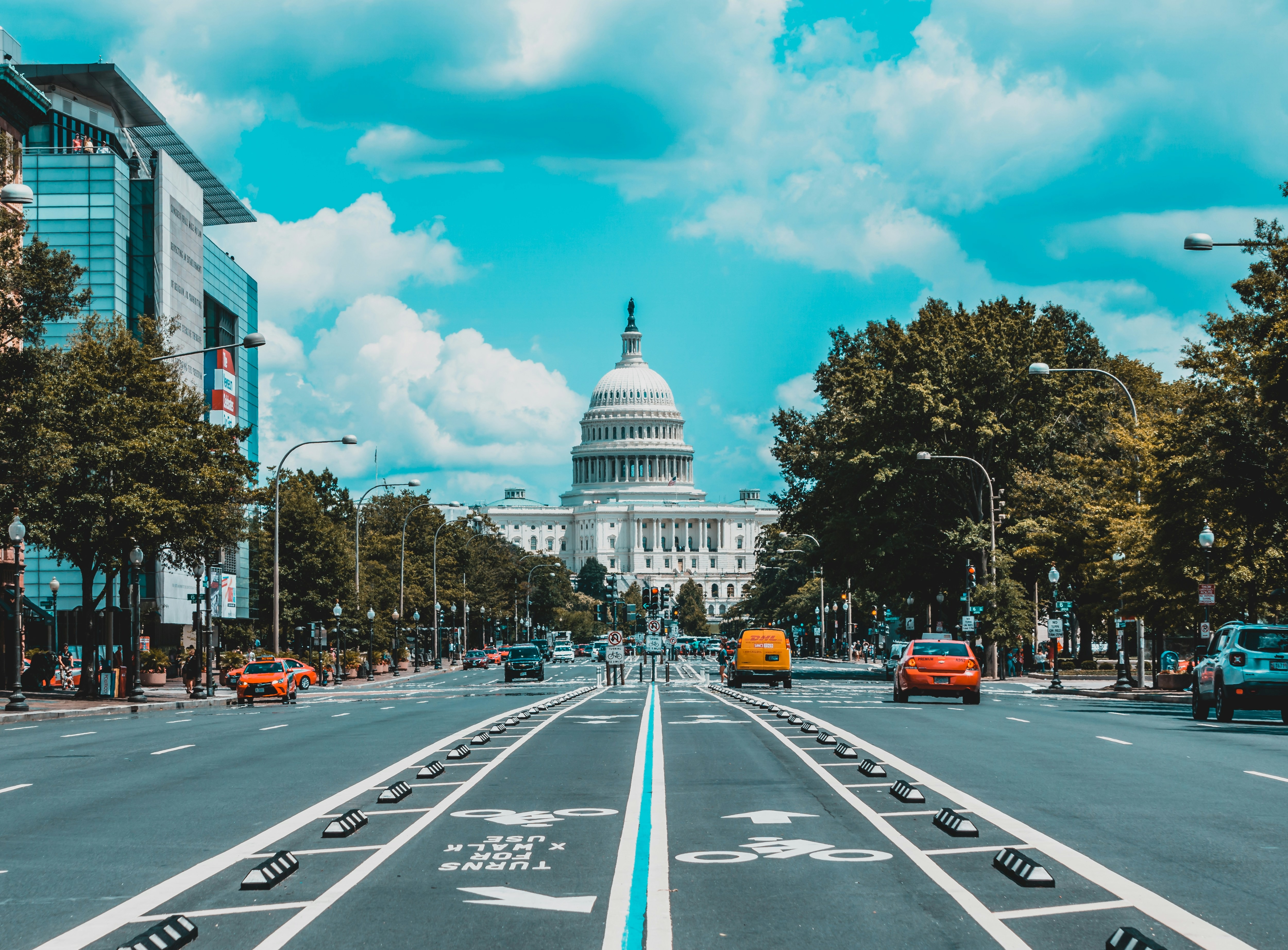
We aim to dispassionately analyze the facts, but as D.C. metro residents, our hearts go out to the thousands impacted by recent administration actions. In fact, just last week, several of our clients who are government employees reached out to us to discuss the impact of the “Deferred Resignation Program” on their financial and retirement plans.
As apolitical as we try to be, no one should be forced to make life-changing financial and career decisions in a matter of days. The first few weeks of the Trump administration have highlighted dramatic policy volatility and ensuing uncertainty.
The president’s “unique” management style calls into question the reliability of many financial projections. Undeniably, this uncertainty is likely to dampen economic activity as business investment slows and higher prices affect consumer behavior.
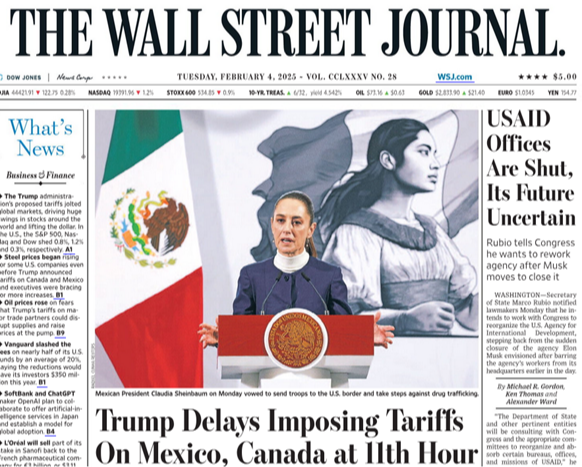
Tariff uncertainty will add friction to the normal functioning of the economy. The logical and prudent conclusion is to assume softer GDP growth, all other factors equal. The picture below of the WSJ front page highlights the new environment.
However, it’s important not to overreact to each headline, as we’ve seen the news change quickly.
Are the tariffs a negotiating tactic (fentanyl, immigration, and/or security policy) or a long-term tool to bring manufacturing back to the U.S.? It matters which of these two strategies the new administration aims for. We simply cannot come to a conclusion just yet.
On the positive side, the economy has started 2025 with strong momentum following the election. For example, the Small Business Optimism Index hit a six-year high in December. Small businesses, which account for the majority of jobs in the U.S., are less directly impacted by tariffs. Job creation and consumption should remain areas of strength.
Potential Impacts
Tariffs & Tariff Wars
The global economy should be able to withstand short bouts of tariff chest-thumping versus a sustained tariff regime. With the rest of the world demand weak, the U.S. has the upper hand in bargaining. Prolonged tariffs will likely negatively impact all sectors, with large-cap companies with overseas exposure at greatest risk of retaliatory tariffs.
Domestic utilities, for example, would have low direct exposure to tariffs compared to the high international revenue exposure at multinational companies.
Small-cap companies have far less direct exposure to international markets and should be relative winners.
Tariffs and Small Caps
Inflation could impact highly indebted companies because the Federal Reserve is unlikely to lower rates in such environment. This negatively impacts small-cap stocks that have more debt, offsetting the benefits from lower exposure to foreign economies we mentioned earlier.
Can Tariffs Spark Inflation?
Many experts point to the fact that tariffs during Trump 1.0 did not lead to notably higher inflation. Among other reasons, this can be explained by the weakening of the Chinese Yuan by almost 10% which allowed Chinese suppliers to absorb the cost of the tariffs. However, with tariffs proposed on more goods and countries, prices in the U.S. will probably have to rise.
A 25% tariff on goods from Canada and Mexico would be especially hard on auto prices, which play a big role in how inflation is calculated. It’s possible that the Canadian and Mexican currencies might weaken, which would help keep prices down, but it’s risky to assume that will happen.
Expensive Stock Valuations
Rising economic uncertainty could disappoint Wall Street’s elevated expectations of earnings accelerating in 2025.
S&P 500 earnings growth is estimated to rise 14% in 2025 from about 9.4% in 2024.
The economic policy flip-flops of the current administration increase the probability of disappointing these elevated expectations as companies defer investment and consumers cut back on spending because prices rise.
What about positives?
Tax Reforms
The administration has proposed extending expiring tax cuts and introducing new ones, specifically reducing corporate taxes from 21% to 15%. These policy adjustments are expected to support economic growth and will likely disproportionately benefit "old economy" companies that generate above-average cash flow.
Deregulation
The new administration has focused on reducing government regulations, which could lower business operating costs and encourage investment. Financial companies and banks are likely the top beneficiaries of this approach as capital rules are eased and mergers and acquisitions (M&A) activity picks up.
Pro-Market Mindset
President Trump is one of the few leaders who explicitly refers to the stock market as a barometer of his success. As some of you may know, the markets tend to react to new policies rather quickly.
For what it’s worth, the stock market may serve as a form of checks and balances for a leader who prefers to rely on his own judgment on many issues.
What does this mean to you?
Even with the flurry of new updates that seem to surface on a daily basis, it’s too early to make any conclusions on the impact of the new administration's policies.
If you believe in the president’s belief that America’s golden age has just begun, we encourage you to take a broader view, suggesting that many factors are interrelated and cannot be fully controlled by any one person.
On the other hand, if you find yourself uncertain about the future, we suggest that you rely on your financial plan, which hopefully includes at least some protection mechanisms for such an environment.
As King Solomon famously pronounced, “This too shall pass.”
As always, I’m here to help if you have any questions.