


Written by Alex Seleznev, MBA, CFP®, CFA | February 19, 2025
I find it rather fascinating that successful people with approximately the same level of assets can feel so dramatically different about their happiness in retirement. When I meet with my young retirees who are happy, they are full of stories and excitement about the future. In some sense, it doesn’t feel like the rest of the world, including our current political climate, bothers them in any way.
On the other hand, we have clients who clearly have sufficient assets for a comfortable retirement, but they simply don’t seem to be happy. Or at least, it doesn’t show once we finish discussing their finances and touch on other parts of their life.
Sure, your personal perspective will always play a role in how you see the world around you. The glass-half-full vs. glass-half-empty mindset is alive and well.
But is there anything we can do to prevent this type of thinking in retirement? After all, isn’t this all about enjoying your golden years?
I recently stumbled upon Dr. Martin Seligman’s PERMA model which discusses the five components that people pursue to improve their well-being. As I dove deeper into Dr. Seligman’s work, I realized the concepts he described can be incredibly helpful in creating a framework of happiness for soon-to-be and young retirees.
My thinking is that with the right mindset at the beginning of your retirement, the rest of your golden years are likely to be more enjoyable and rewarding.
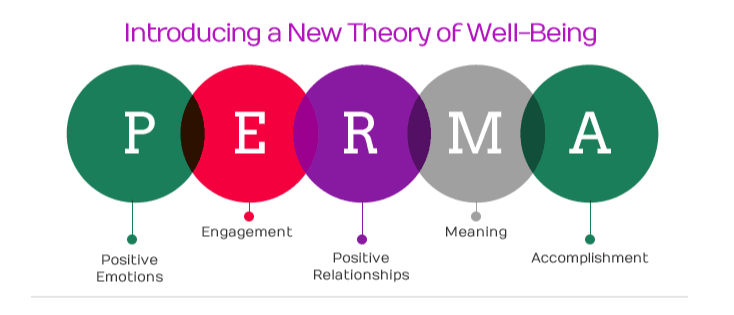
P - Positive Emotion
Spend more time with people you care about or doing things you enjoy.
Playing golf, pickleball, or visiting your children or grandchildren are perfect examples.
Try to remove or outsource things that you don’t enjoy doing to free up your time.
I will say that money can significantly impact this factor of your overall happiness, as it would enable you to do things you enjoy and eliminate tasks you dread doing.
E - Engagement
This refers to deep and meaningful work that consumes you and keeps you in the “flow.”
This feeling is familiar to those who enjoy their work and are actually good at it.
When you find yourself in your “flow,” it doesn’t take much effort to complete even more challenging tasks and time seems to "fly."
In retirement, try to identify activities that you really love and where you lose track of time when you do them.
R - Positive Relationships
In our previous newsletters, we talked about the fact that for many people, specifically in professional occupations, most of the network comes from work interactions.
Unfortunately, it’s challenging for many people to maintain these networks when they retire (even though it’s not impossible).
Even before you retire, consider joining groups that will keep you social and create new friendships.
Also, consider reconnecting with old friends or family that you have not spoken with in a while.
M - Meaning
Several of my clients gently (or not so gently) suggested that some of their former friends were surprised by their decision to retire. This applies specifically to those who managed to accumulate enough assets to retire early when compared to the “standard” retirement age of mid-60s.
The perception of no longer contributing to society can make a significant negative impact on your happiness in retirement. But it doesn’t have to be this way.
One option is to get involved with an important cause or organization that matters to you and your community. If your time allows for it, consider donating your time in addition to any monetary support that you’ve been providing.
A - Accomplishments/Achievements
Earlier this year, in one of the meetings with a couple in their early 80s, they mentioned that they don’t have much they are looking forward to. This made me ask a follow-up question of what they meant by that, since I know they have good relationships with their family and are involved with their community. After some hesitation, they responded that they have everything they need and can’t think of anything that would make their life better.
This is clearly a personal choice, but your accomplishments don’t need to end in retirement. You can always set goals for yourself that make you feel like you are improving, regardless of where you are in life.
What does this mean to you?
For many people, their retirement years will span anywhere between 20 to 30 years or even longer. It’s undeniable that you need to have a strong and retirement-specific financial plan to feel confident in your financial future.
But don’t end it there! The PERMA model can help you think of other ways to make your golden years more enjoyable and rewarding.