


Written by Alex Seleznev, MBA, CFP®, CFA | July 2, 2025

I assume you have been paying attention to the latest escalation of tensions between Israel and Iran. Once you start putting the pieces together, the latest events are perhaps not as surprising as they seem. Nevertheless, most geopolitical conflicts do catch the markets somewhat off guard with some consequences.
In this newsletter, we offer our thoughts and ideas on the latest escalation in the Middle East. We won’t go deep into the long-term repercussions of the latest events. Instead, our goal is to provide some historical facts for similar events and their impacts on the markets and potential short-term consequences.
To keep it simple for you, this newsletter will be in the Q&A format.
How do geopolitical shocks impact markets?
Surprisingly, even though events like these can shake the markets at first, they usually don’t have a major lasting impact. As the chart below shows, the performance of the S&P 500 Index on average and after some of the most significant geopolitical events over the past century is essentially the same. Most of the negative impact is usually seen over the first 3 months and then dissipates over the next 6 and 12 months.
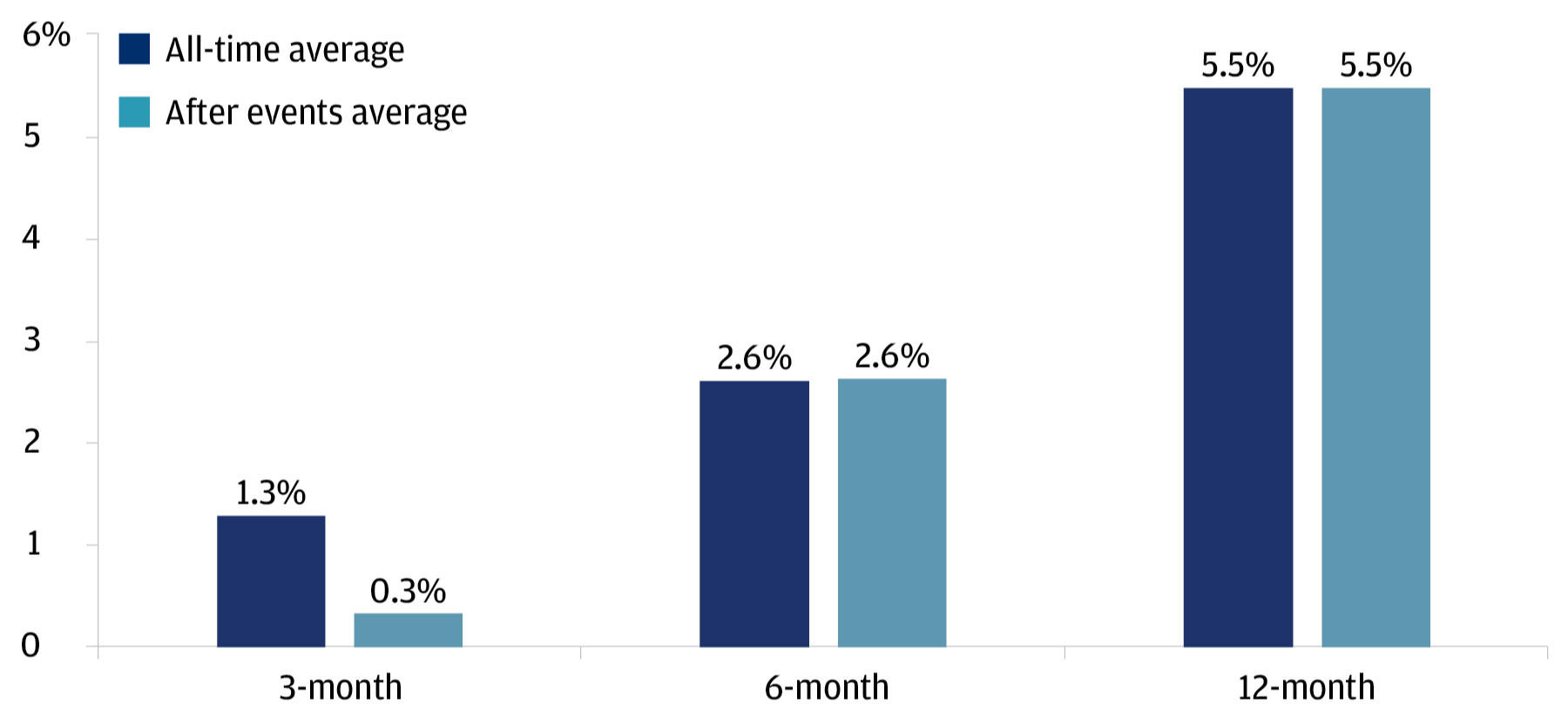
Source: Robert Shiller, Haver Analytics. Data as of 12/31/2023
What parts of the market will be impacted the most?
As many of you have probably seen in the news, oil prices have been hit the hardest. Some market experts believe prices could climb as high as $120 per barrel, up from $73 as of June 16, 2025. While that’s possible, there are a few reasons why it’s not the most likely outcome. Israel hasn’t gone after Iran’s oil production. That’s not surprising, given that President Trump has been pushing for lower oil prices.
Iran’s threat to block the Straits of Hormuz probably won’t happen. Most shipping traffic already avoids Iranian waters and goes through Oman’s territory instead. If Iran attacks ships in Omani waters, it could trigger a military response from the Gulf Cooperation Council (GCC). Iran is already in a weakened state and needs support from other Gulf countries. Threatening their oil exports would likely backfire.
On top of that, we’ve actually had a bit of an oversupply of oil since “Liberation Day.” And, as is often the case, high prices tend to correct themselves. For example, U.S. oil rigs have been taken offline recently as prices dropped. But these shale rigs can be restarted fairly quickly. So, if prices stay high for a while, we’re likely to see more drilling activity and increased oil supply, which should bring prices back down.
Should you consider buying more energy stocks?
Probably not. There is some potential for a “quick gain” if you want to go in and out, but we don’t recommend or implement strategies like this at Capital Squared.
As a side note, there is something to be said about holding mostly “unloved” energy stocks that tend to provide benefits in times like these.
What does all of this mean to you?
First of all, many of our clients have friends and family who are in the region. I sincerely hope your loved ones will remain safe at this challenging time.
When it comes to your investments, this is one of those times when not doing much is likely the best strategy. If you have been implementing a certain strategy by gradually buying stocks, consider continuing with your approach.
I very much hope there is going to be a time when the world will be at peace and move forward toward the prosperity of all. And I do hope this happens in my lifetime.